| Where the guideline stands | Insufficient evidence to recommend either way |
| Availability | Prescription |
| How long before you judge it | Days, for flares |
| Pregnancy | A clinician decision. |
| Sources behind this page | 7, every one linked at the bottom |
What it is
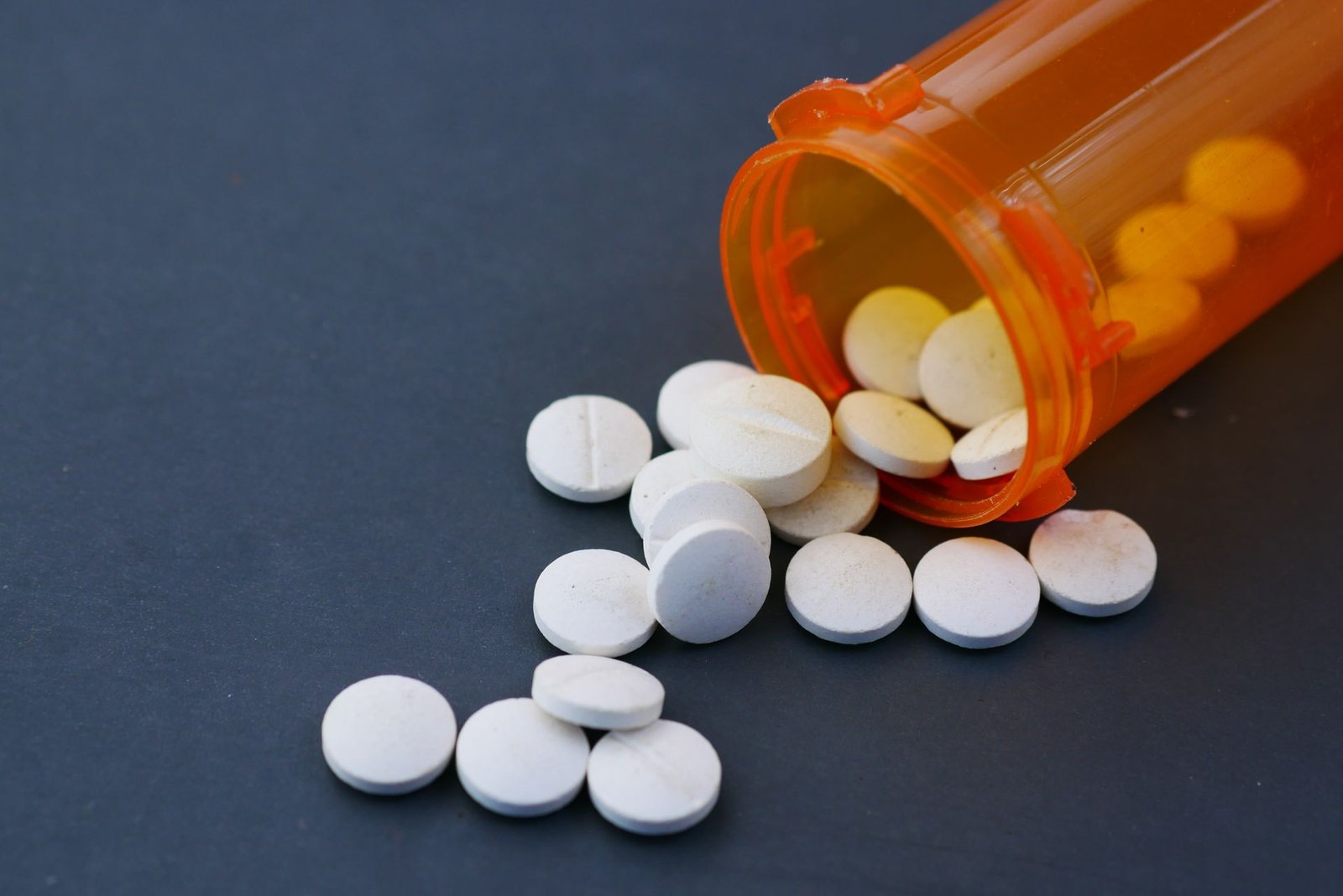
Oral corticosteroids (prednisone, prednisolone and their relatives) are systemic anti-inflammatory drugs. They enter cells, bind glucocorticoid receptors and shut down a wide range of inflammatory signalling. They are not anti-acne drugs in the way a retinoid or an antibiotic is: they do not unblock the follicle, do not reduce sebum and do not suppress Cutibacterium acnes. What they do is switch inflammation off quickly and indiscriminately, which is why they belong only to the small set of situations where the inflammation itself is the emergency. Note that the 2024 guideline does contain a corticosteroid good practice statement, but it is for intralesional injection into individual lesions: a different route, a different scale, and not the same thing as taking steroids by mouth.
What the evidence actually shows
There is no controlled trial base for oral corticosteroids in ordinary acne, and the guideline covers them in its hormonal-agents insufficient-evidence statement, which means no recommendation either way, not a recommendation against. Separately, the guideline’s only corticosteroid recommendation is the ungraded good practice statement (3.3) on intralesional injection, a different route entirely. What exists instead is case-series and consensus evidence for three narrow situations. Acne fulminans is the clearest. It is a rare, abrupt, ulcerating form of severe acne (under 1% of acne cases) which, as the StatPearls review puts it, does not respond to the traditional antibiotics used for typical acne. The sequence described there, drawing on Greywal and colleagues’ 2017 JAAD evidence-based recommendations, is an oral corticosteroid first, at 0.5 to 1 mg/kg/day for at least two weeks, and at least four weeks where there are systemic symptoms, with isotretinoin added afterwards at a low starting dose. The second is the isotretinoin-initiation flare. Isotretinoin can transiently worsen severe nodular acne when it is begun, occasionally to the point of provoking acne fulminans; the described mitigations are a low initial isotretinoin dose and, in high-risk patients, corticosteroid cover. In practice this pairing is rare: an analysis of US national ambulatory survey data (Vasicek et al., 2019) found that only 0.04% of acne visits involved prescriptions for both isotretinoin and a corticosteroid. The third, a short bridging course for a severe inflammatory flare while definitive treatment is arranged, is the least documented of the three and rests on clinical experience rather than trials. None of this is evidence for steroids as acne therapy. It is evidence for steroids as rescue.
How it is actually used
This is not something to seek out, and the useful practical advice runs the other way: if oral steroids are offered for ordinary acne, it is fair to ask what they are for and what follows them. Legitimate use is short, specific and specialist-initiated: days to a few weeks, tapered, running alongside the treatment that will actually do the work, usually isotretinoin. It is not a maintenance option, and not a way to clear a face before an event. Two adjacent things are worth keeping separate. Intralesional triamcinolone injected into a single painful nodule is a different intervention, and that one the guideline does include as a good practice statement. And corticosteroids are themselves a recognised cause of an acne-like eruption, so the same drug class sits on both sides of the ledger.
Safety and who should avoid it
Even short courses are not free. A US cohort study of 1,548,945 adults aged 18 to 64 (Waljee et al., BMJ 2017) found that in the 30 days after starting a short outpatient course, rates of sepsis, venous thromboembolism and fracture rose sharply (incidence rate ratios of 5.30, 3.33 and 1.87 respectively), with the effect fading over the following months. That was any short course in any adult, not acne specifically, but it is the scale of risk being accepted. Longer use adds the familiar burden on blood sugar, blood pressure, bone, mood, sleep and adrenal function. Steroids also cause their own acneiform eruption, monomorphic papules and pustules mainly on the trunk and limbs, which can be mistaken for the acne worsening. Stopping abruptly can provoke a severe flare.
Commonly repeated: a short course of oral steroids is a good way to calm a bad acne flare. What the evidence actually shows: the 2024 AAD guideline found the evidence insufficient to recommend oral corticosteroids for acne either way, naming them alongside flutamide and metformin in its hormonal-agents insufficient-evidence statement; their documented role is confined to acne fulminans and the isotretinoin-initiation flare; corticosteroids are themselves a recognised cause of a monomorphic acneiform eruption; and a large US cohort study found sharply raised 30-day rates of sepsis, venous thromboembolism and fracture after short outpatient courses in adults generally.
Sources
- Reynolds RV, Yeung H, Cheng CE, et al. Guidelines of care for the management of acne vulgaris. J Am Acad Dermatol 2024;90(5):1006.e1-1006.e30
- American Academy of Dermatology. Acne clinical guideline (2024) — recommendations and good practice statements
- Reynolds RV, Yeung H, Cheng CE, et al. Guidelines of care for the management of acne vulgaris, JAAD 2024 — recommendation summary (strength and certainty ratings)
- Saleh HM, Zito PM. Acne Fulminans. StatPearls [Internet], StatPearls Publishing; updated 19 January 2025
- Nair PA, Saleh HM, Salazar FJ. Acneiform Eruptions. StatPearls [Internet], StatPearls Publishing; 2024
- Vasicek B, Adams W, Steadman L, Reserva J, Swan J. Coprescription of isotretinoin and systemic corticosteroids for acne: an analysis of the National Ambulatory Medical Care Survey, J Clin Aesthet Dermatol 2019;12(6):27-28
- Waljee AK, Rogers MAM, Lin P, et al. Short term use of oral corticosteroids and related harms among adults in the United States: population based cohort study, BMJ 2017;357:j1415
Keep reading
See where this sits against every other acne treatment on the acne treatment evidence map, or check how it combines with another ingredient in the ingredient combination checker. For the guideline’s own wording on this, see the 2024 AAD guideline, recommendation by recommendation.
Not medical advice
This page reports what the published evidence says about a treatment. It is not a treatment plan and it cannot account for your skin, your other medications or your medical history. Nothing here has been reviewed by a clinician; see our editorial policy for what that means. Talk to a clinician before starting or stopping any prescription treatment.